Paver Driveway Build From the Ground Up
A driveway does a lot more work than most people give it credit for. It takes a beating every single day - vehicles, weather, freeze-thaw cycles, the whole deal. When it starts to fail, it's not just an eyesore. It's a liability. That's why, when we build one, we build it to actually last.
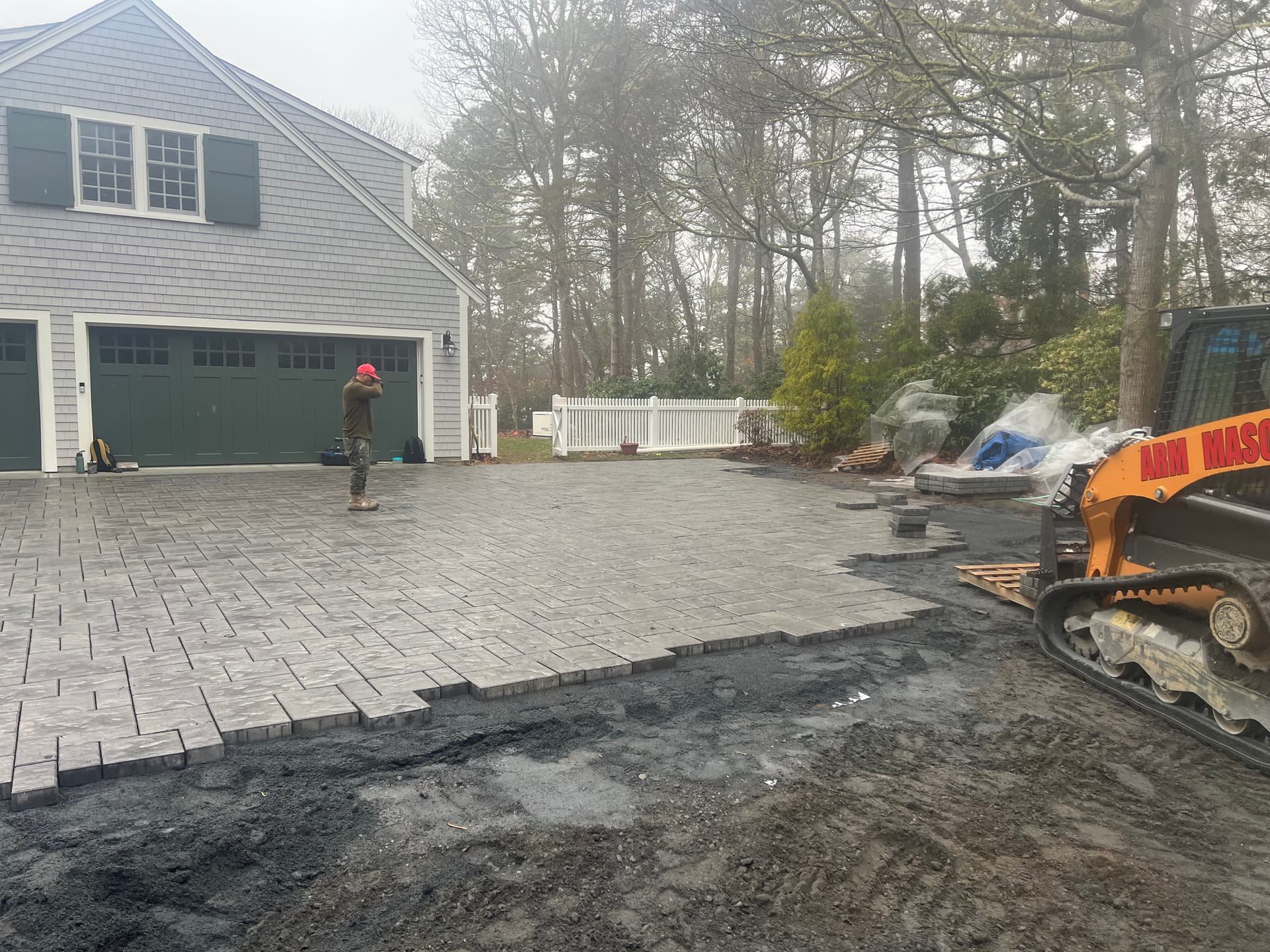
Here's what we were working with - a full driveway installation from prep to final paver. You can see the ground work happening early on, with the skid steer moving material and the base being set before a single paver goes down. That base work is everything. It's what separates a driveway that holds up for decades from one that starts shifting and cracking within a few years.
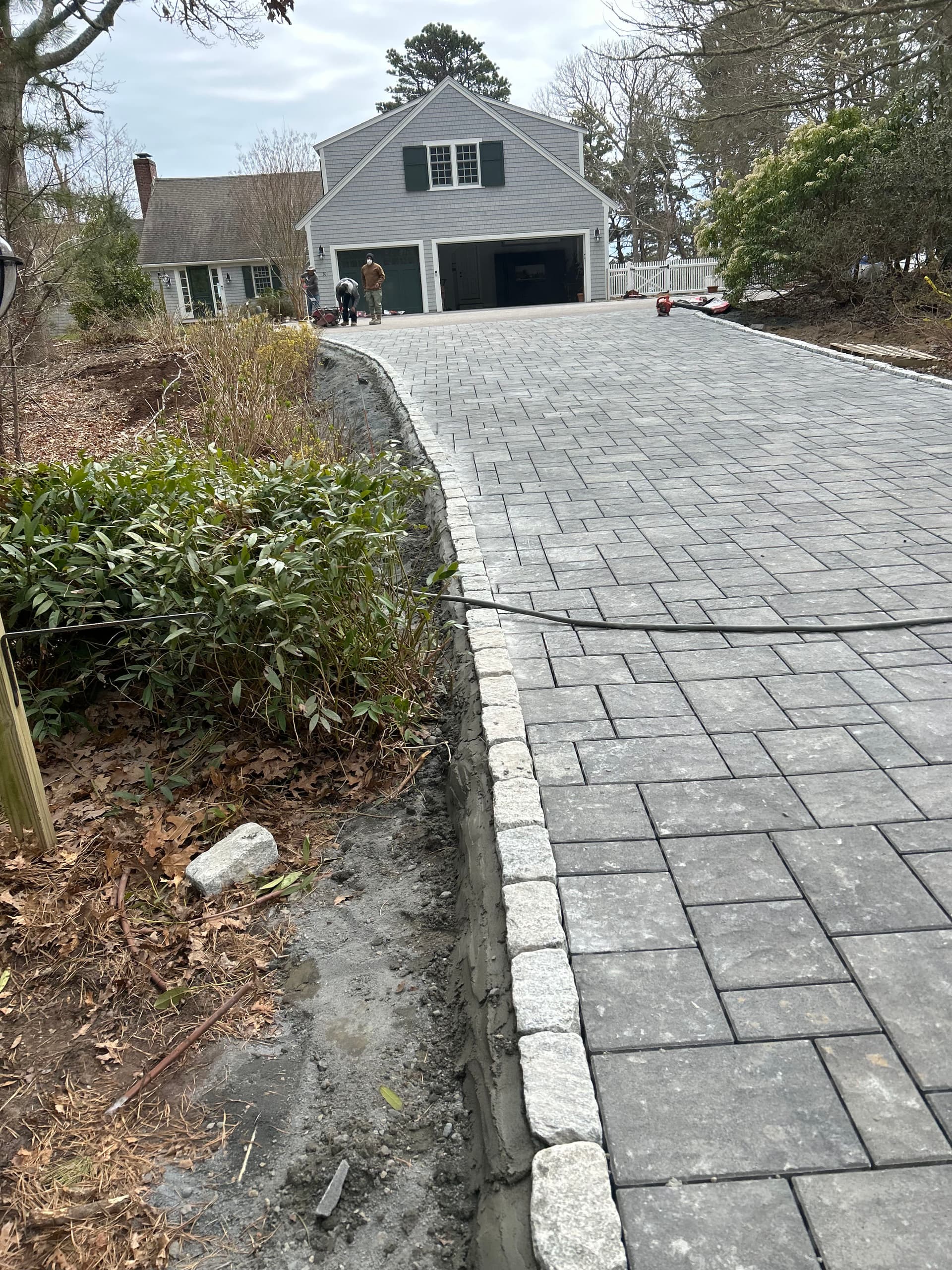
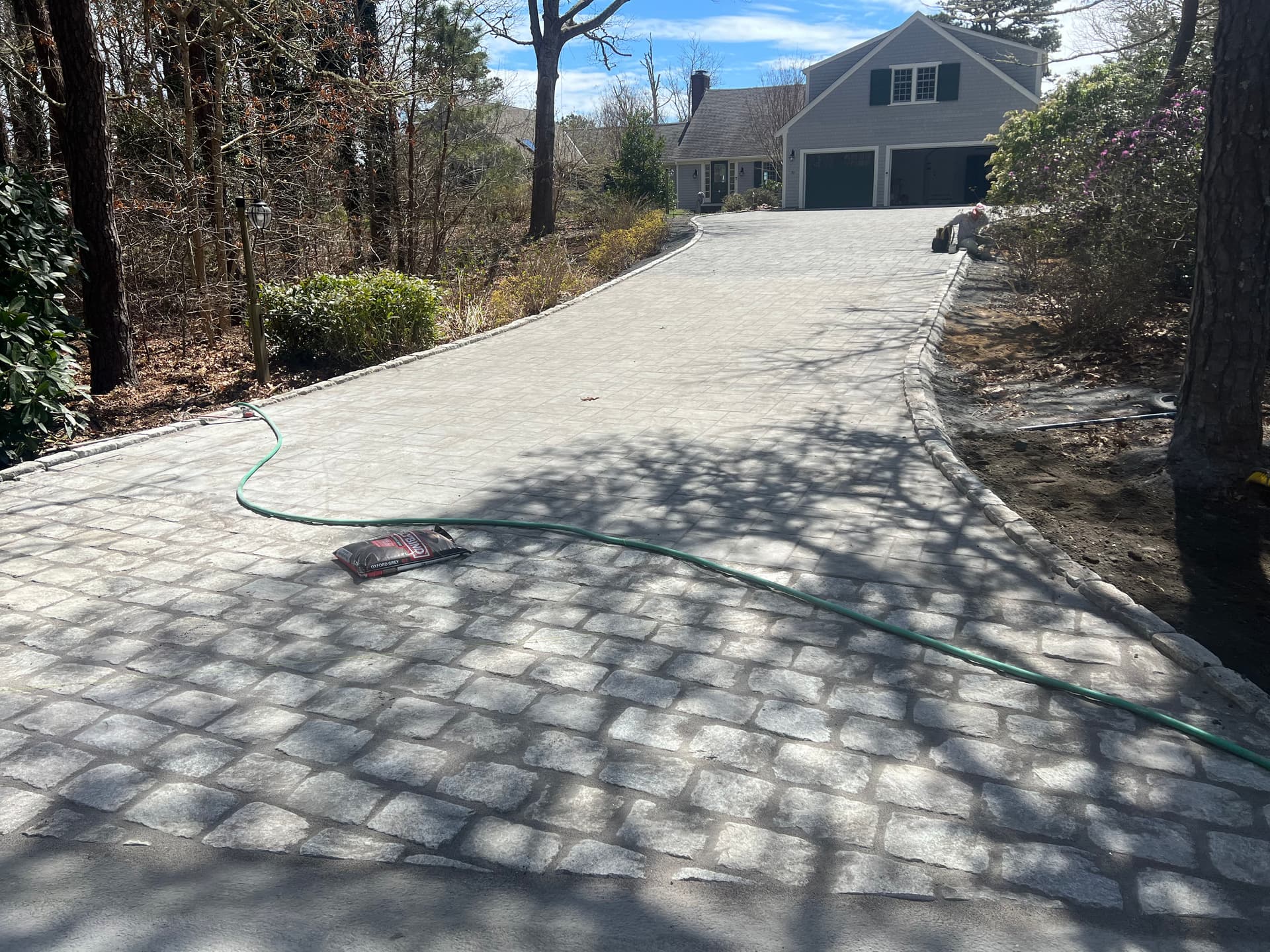
The main field uses a large-format rectangular paver in a classic gray blend, laid in a running bond pattern. Clean. Structured. It works with the home's shingle-and-shutter exterior without trying too hard. Then along both sides, we set a cobblestone border - smaller, rougher-cut stones that frame the whole surface and give it a finished, intentional edge. That combination of formats is one of our favorite ways to add character without overcomplicating things.
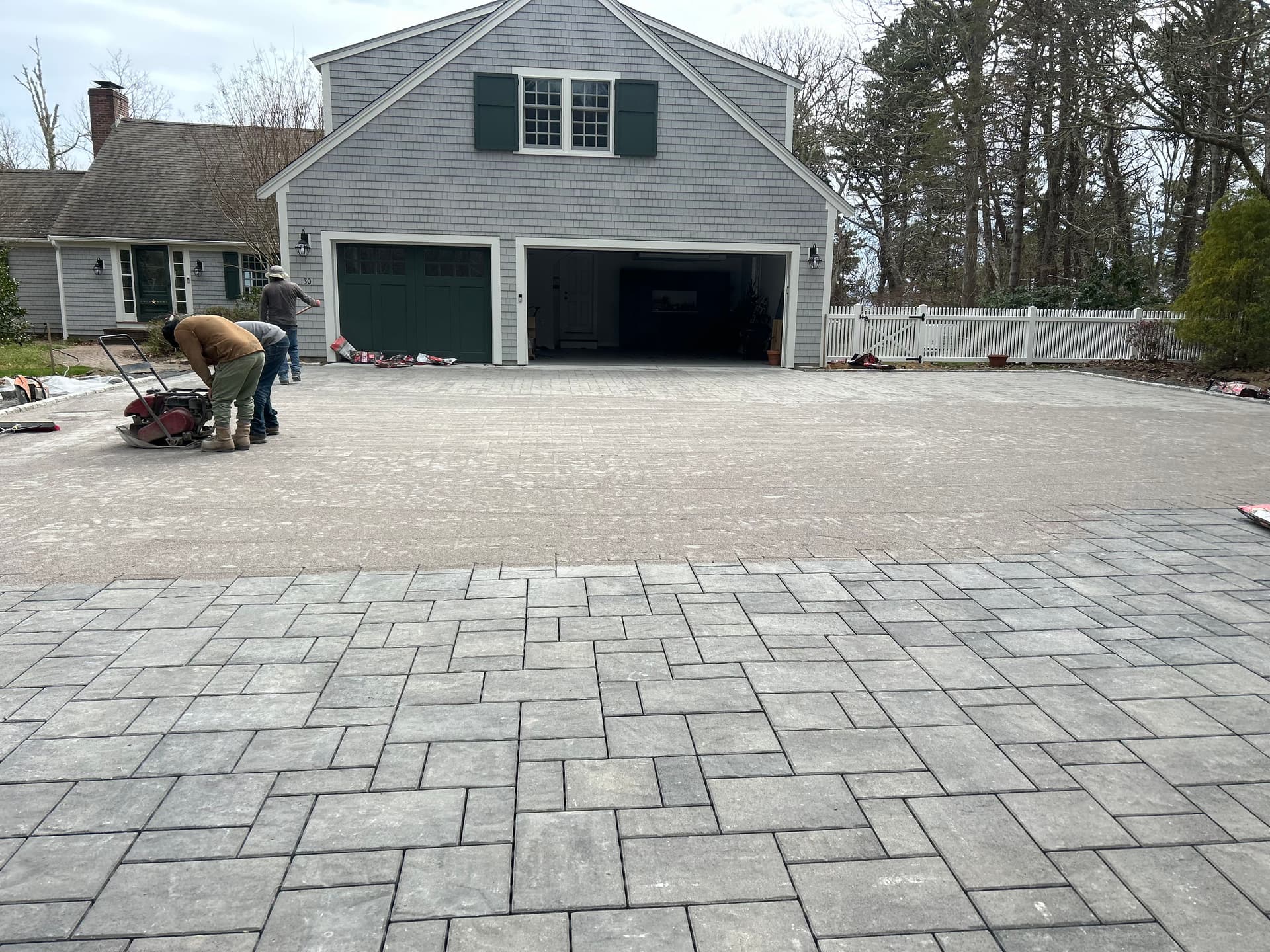
The crew ran a plate compactor across the surface to lock everything in tight after the polymeric sand was worked into the joints. That step is easy to skip if you're cutting corners - but it's what keeps the pavers from shifting and the joints from washing out over time. We don't skip it.
A well-built paver driveway adds real curb appeal and real value to a home. It also gives you something asphalt simply can't - a surface that can be repaired section by section if something ever does go wrong, without tearing out the whole thing. That's a practical advantage that a lot of homeowners don't think about until they need it.