New England Stone Steps and Tiered Patio with Coastal Views in Dennis MA
When a home sits right on the water, the outdoor space has to do more than just look good - it has to hold up. Coastal properties deal with wind, salt air, and shifting ground that can wear down lesser materials fast. So when we took on this Dennis, MA job, the material choices mattered just as much as the design.
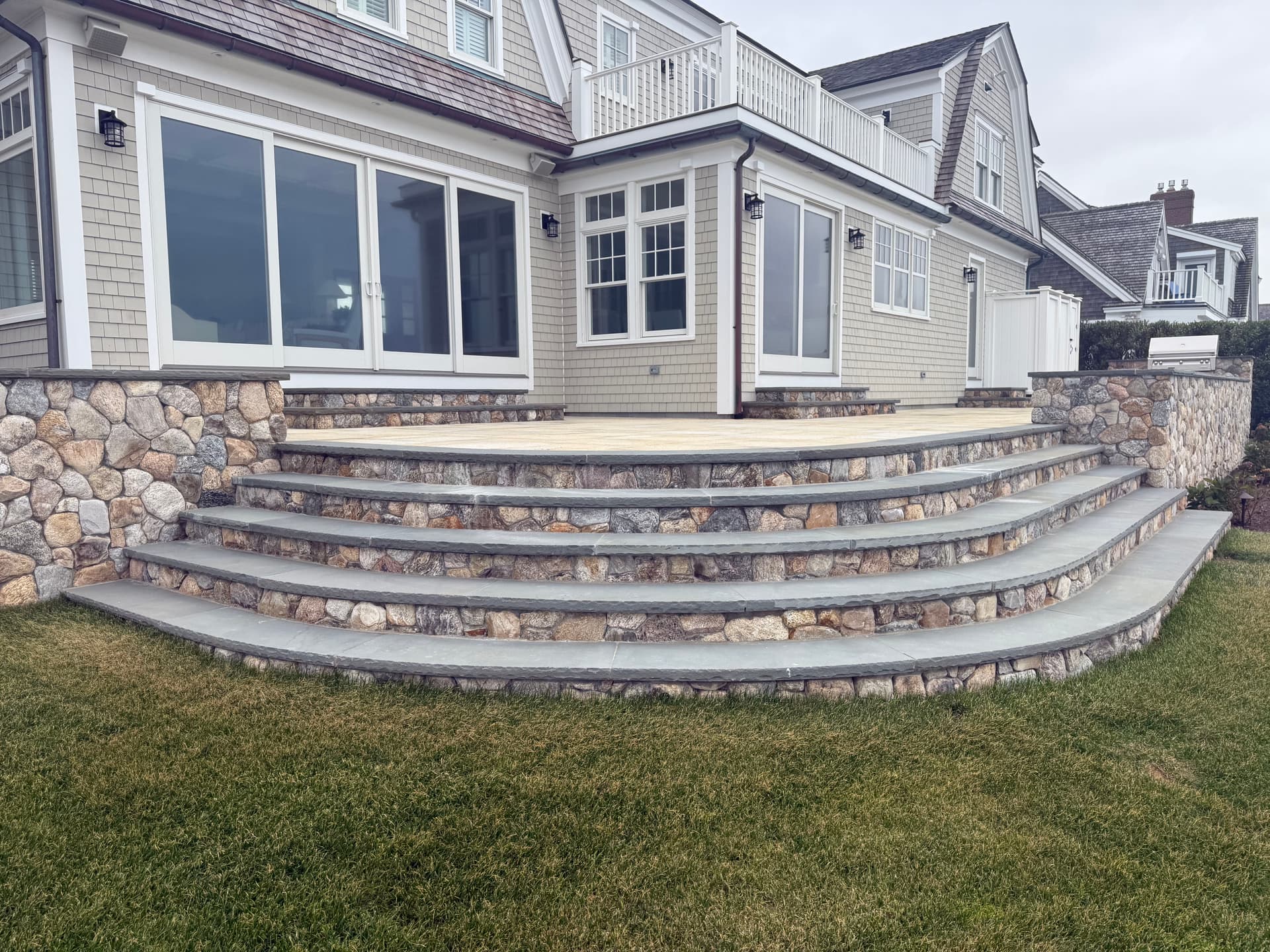
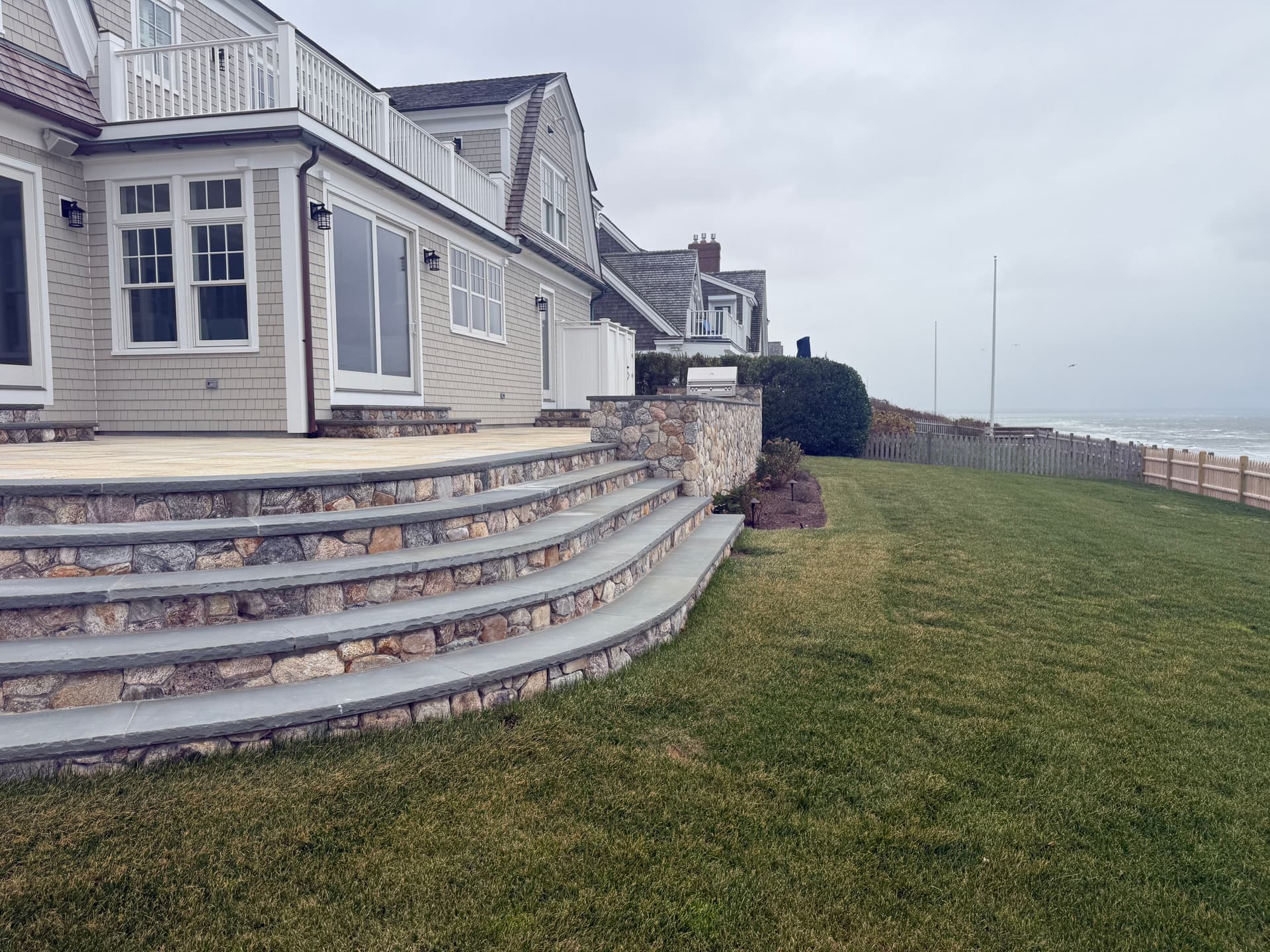
We used New England fieldstone for the risers and retaining walls, paired with thermal bluestone treads throughout. That combination is a proven one. The fieldstone brings a natural, rugged texture that fits right in along the Cape, while the thermal finish on the bluestone gives you a surface that handles moisture without getting slick. It looks clean. It performs.
The layout here was designed to flow. Wide, curved steps fan out from a tiered patio and lead straight down to the lawn - and beyond that, the water. It's not just a staircase, it's a proper transition from the house to the yard. The stone walls on either side carry the same New England fieldstone, tying everything together so the whole structure reads as one cohesive build rather than a collection of separate pieces.
This is the kind of work where the details are what make it last. Proper base preparation, tight stone coursing on the walls, and consistent step depth all matter more than most people realize. A sloppy build in a coastal environment won't hold up - full stop. We've been doing this long enough on Cape Cod to know what works and what doesn't.
Whether you're working with a flat backyard or a sloped lot with a view worth framing, stone steps and retaining walls can completely change how a property functions and feels. Done right, they add structure, safety, and a look that genuinely ages well.